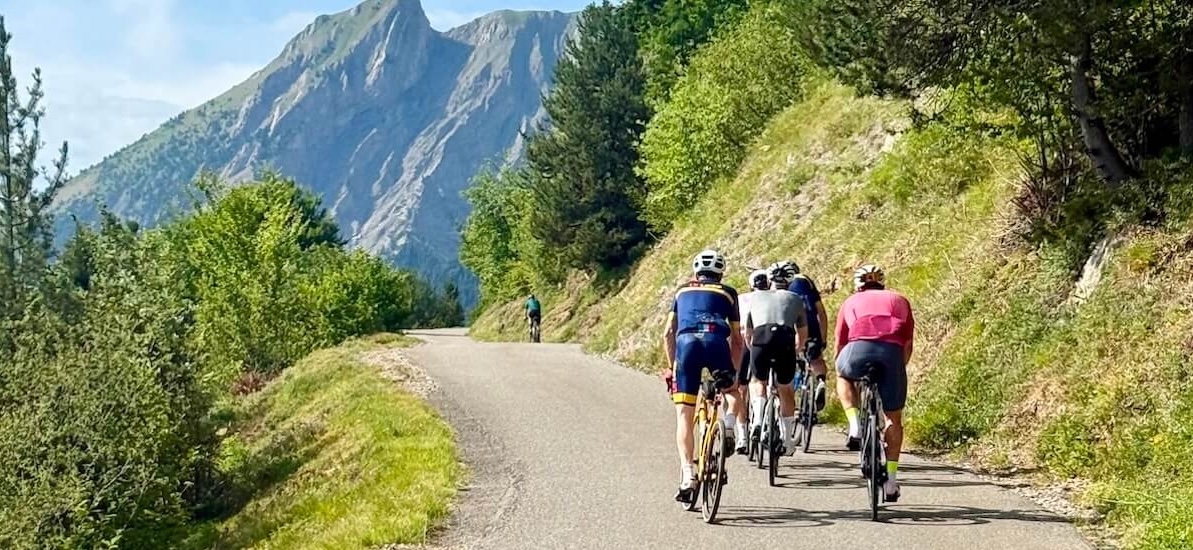
What is it like to ride the Grand Loop?
For those who are considering a full or half Loop, we wanted to write a blog to explain more than the stats – to go some way towards answering the question of what is involved in taking on such a challenge, what it feels like when you’re actually doing it, and what you gain more generally from the experience.
As staff, we have the joy each year of seeing riders arrive into Paris, tired and triumphant, and we think back to three weeks earlier at their first briefing (when they were clean and rested!) and everything that’s happened since…
There’s a lot that goes on between signing up and getting to that first stage though, and while it’s actually quite straightforward (because really all you have to do is pay the money, take on some fundraising, ride your bike and believe you can do it), it can also feel quite overwhelming – because for many months, Le Loop will be a big feature of your life and conversations, and it will take up more bandwidth than you might want at the time. Lots of the preparation and training is extremely enjoyable but competing pressures and the time you spend planning and organising family and work life to fit it all in can come as a surprise.
Alumni cyclists shout loudly and enthusiastically that the experience is a hundred times worth it – but you do need keep motivation and momentum up, and know that you have strategies to cope with the tricky bits. Of course, we’re here to help with training advice, motivation blogs, travel planning help etc. but if you take the plunge, it’s worth doing so with open eyes and a good degree of enthusiasm – as well as the reassurance from us and our alumni that the most special few weeks await.
“Every wet, cold, hard winter ride was worth it. Everything I put myself through was worth it”
On arrival day, there’s an unsurprising mix of trepidation and uncertainty in the group with most people imagining the ways in which they might not be as strong as the others. For us staff, this is one of the things we wish we could change the most – because inevitably, the vast majority will be absolutely fine. The number of Grand Loopers who start out but don’t make it to Paris (not counting Covid) is under 5%, ie. an average of less than 2 people each year. Everyone will of course have their tough days, or days when they really struggle (for all sorts of reasons, and most often nothing to do with cycling ability) but most will make it to Paris with no significant jeopardy.
“You will be fine” can seem like a throwaway comment but in this context it is so true. If you’ve done the training (or a realistic +/-75% of what you hoped to do!) and have a bit of grit and determination stored up, then this really is an achievable goal. If only we could sprinkle some reassuring “you will be fine” dust on our Grand Loopers for the week or two preceding stage one, and hand it out in bags at the Grand Loop arrival briefing!
Most cyclists discover very quickly that although Le Loop is indeed one of the hardest things they will ever do, it’s also one of the most fun. The sheer joy to be had in riding such spectacular routes day after day is difficult to describe – but here’s some feedback from previous Grand Loopers which speaks for itself:
“Friendliest ride I have ever been on.”
“Unusually human. Fulfilling. Surreal.”
“I can honestly say this was the best two weeks of my life.”
“The epitome of a no-dicks event!”
What does it feel like?
Although there’s no minimising the challenge ahead, there are a few ways in which being on tour may actually feel easier than life at home. For one thing, your only job for those three weeks is to ride your bike – and to do whatever’s needed to keep the show on the road, such as sleeping, stretching and eating large quantities of food. Everyone around you is either doing the same thing, or dedicated to supporting your efforts. There are far fewer competing demands than when you were trying to balance your training around family commitments and a full-time job.
Inevitably, when you’re on your own in the last throws of training, it’s easy to become preoccupied with the worries of “will I make it to Paris” or “am I fast enough” – and because of these very natural concerns, you don’t anticipate the support, encouragement or shared moments of pain and joy which are as much the experience as the physical kilometres cycled. We think a lot about the feel of the event and there are obvious, and less obvious, things we do to make sure that every rider experiences the positive, joyous feel of riding with us.
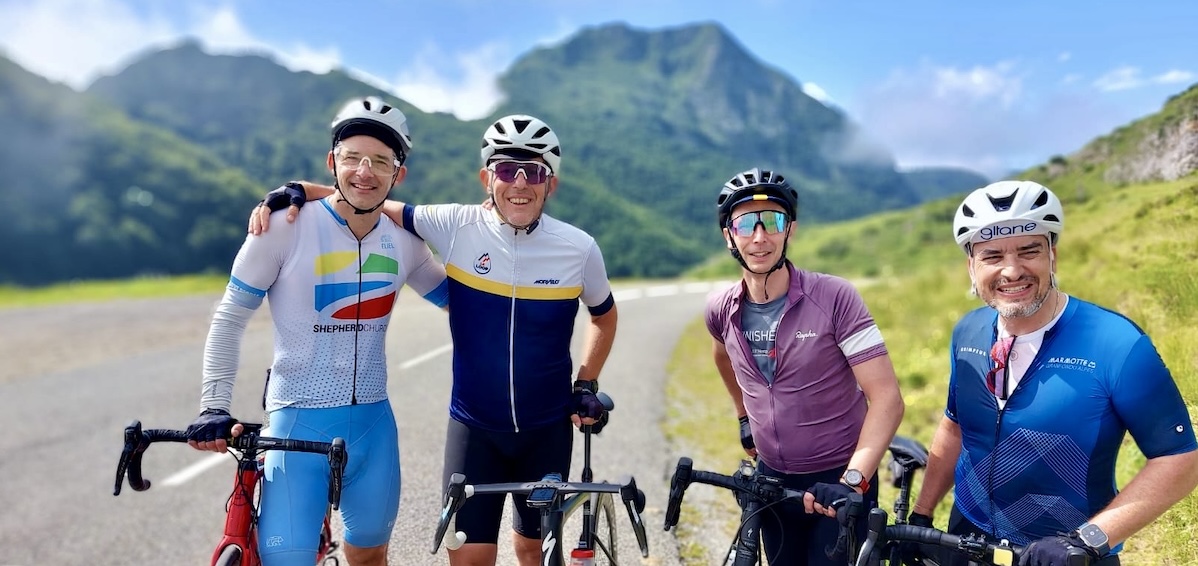
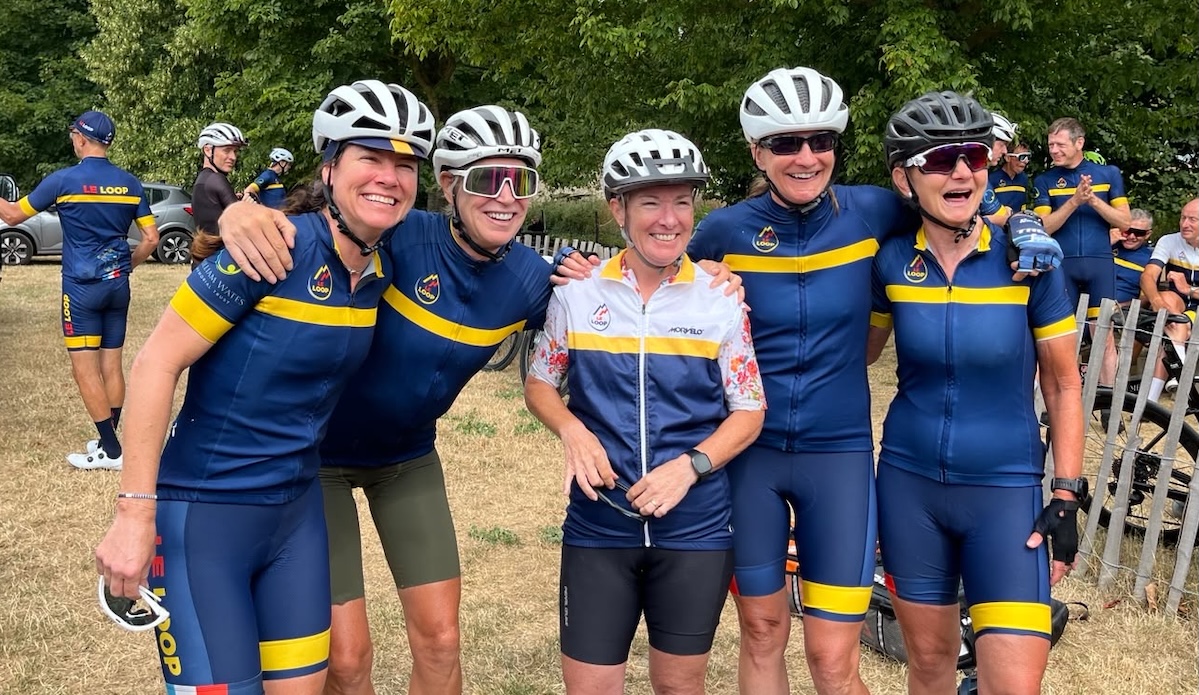
We talk about the camaraderie a lot – and what a difference it makes. It’s easy to gloss over the word or be a bit skeptical when you read it in blogs like this! But in contrast to a lot of your training miles, for three weeks you get to enjoy French sunshine, and the company of a fun, diverse, interesting, brilliant bunch of riders and staff. There will always be people to chat to, wheels to follow, and solidarity in your difficult moments, from people who know exactly what you’re going through. It’s not a throwaway word for us; the camaraderie is a huge part of Le Loop and we want everyone to experience our very special bubble.
“I cannot say just how incredible all the staff are, how brilliant the ethos and culture is, and how that manifests itself in how quickly and deeply the group gel together and act as a community. “Friends for life” is an overused expression, however is genuinely applicable to those I’ve met through Le Loop”
Most riders will have a bad day at some point, and there’s no saying when yours might arrive. For some it comes early on, as their body comes to terms with the reality of back-to-back stages and inadequate recovery time. For others it will be the result of a poor night’s sleep, or the third mountain stage in a row. But quite often the toughest riding days come a just before the first rest day – which is why we advise riders not to push too hard during the first few stages, difficult though that may be when you’re in the best shape of your life.
The second week is when riders start to talk about ‘the bubble’. By now the rest of the world feels far away, and life is measured out in the distance between feed stops. Time behaves differently on Le Loop. The days are long, and so much happens to you between leaving one hotel room and collapsing into the next, that you often find yourself recalling a conversation you had before lunch, and thinking “surely that was last week, not just this morning?”
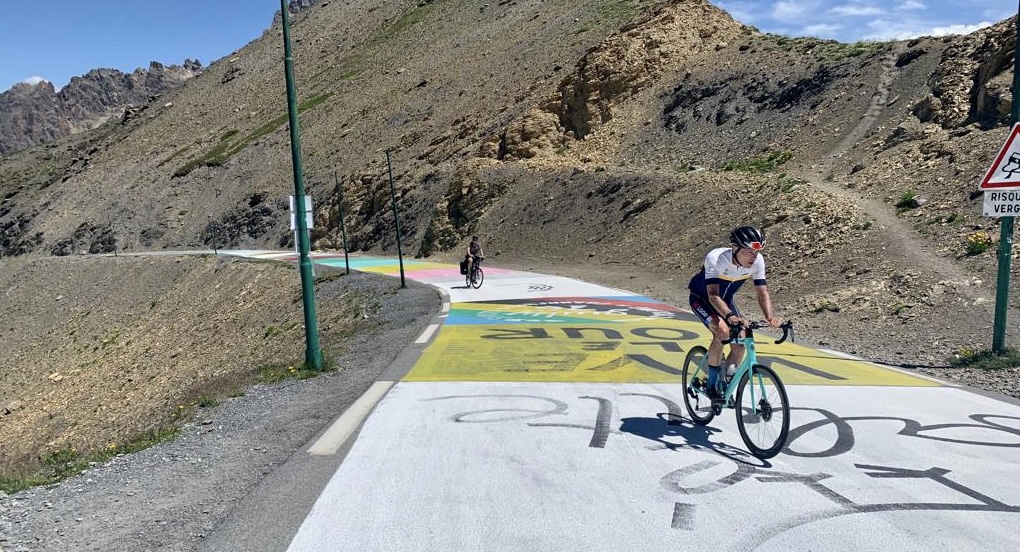
By this point you’re astonished by how much you’re able to eat, and you’ve developed an unreasonable fondness for at least one staff member (Coffee Ian, in many cases). You’ve got so used to following Le Loop’s yellow arrows during the day, that you see them in your dreams. The Tour de France itself has started, and even though the Tour of Tours isn’t the exact same route as the pros, we’ll pass through many of the same locations and you’ll see France come alive with everything cycling related (including Tour jersey bunting which springs up absolutely everywhere!).
It’s a surreal experience knowing that you’re riding a full Tour with real Tour de France stages, knowing that the pros doing the same thing in the same country at the same time.
The curious intimacy you’ve found with your fellow riders starts to become normal, and you find yourself having conversations you never would in everyday life. Sometimes these are absurd, such as when you find yourself developing obscure in-jokes, or enquiring about the progress of each other’s saddle sores. But in many cases riders build up a level of mutual trust that means they feel safe to discuss big life issues that they’d normally keep hidden. As well as helping each other with the challenge at hand, riders quite regularly end up sharing their deepest traumas and vulnerabilities, and many say afterwards that these conversations brought them comfort and clarity they weren’t expecting.
By the third week it’s hard to imagine what’s outside the bubble – and yet, lingering at the back of your mind, is the knowledge that the end is drawing nigh, and your return to real life is imminent. But nevertheless, each stage is such a huge challenge in itself, that even with just a couple of days to go, Paris still seems lightyears away.
Everyone is very tired by this point, but many riders are still in their element, some seem to have got stronger since the first week, and you sometimes catch yourself thinking “hang on, this is easy now.” There are other moments when it all feels too much, and you want to give up then and there – but by now you’ve survived a few of these wobbles and know they won’t last.
You’ve developed strong opinions about the layout of French breakfast buffets and have a post-ride routine that you can carry out in your sleep. (On some days this will be necessary.) Daily gossip centres round who has the best tan lines, and whether there will be Orangina at feed stop four.
By this point most riders don’t even remember what it was they were afraid of before the start. Those who were worried about being slow will have got over that – whether or not they actually are slow – and learned that there is no hierarchy on the road. Most will have found out that riding Le Loop is even harder than they expected it to be, but that they are equal to the challenge, and have more in them than they realised. Everyone’s perspective has changed by this point, and rather than the daunting prospect of riding for three weeks, the focus is more simple; reaching the next feed stop, making it up the next climb, or surviving to the end of the day.
Is the Grand Loop for you?
As we reach the final few stages, Grand Loopers find themselves thinking that they don’t want the ride to end – and then, a moment later, that they can’t wait for it to be over. Our arrival in Paris often feels bittersweet. It’s a day of triumph and celebration, a chance to rest, and for many, a long-awaited reunion with loved ones. But it’s also the end of this wonderful adventure we’ve had together, and time to say goodbye to the new friends with whom you’ve spent every waking hour of the last three weeks.
And this mix of emotions; pride, relief, joy, mixed with the outright real-time enjoyment of so much amazing bike riding, is the magic of Le Loop. The experience is a bit different for everyone but in your own way, you’ll be touched by it.
Our first Lead cyclist, Phil Deeker wrote this back in 2018 and it still beautifully sums up the feeling:
“It’s all about touching the magic of the Tour. Spectators wait for days at the side of the roads for three minutes of madness; riders train all their lives for three weeks of racing; some of us have dreamed for just as long of riding the very same roads as them, and we CAN! Yes, we have to deal with traffic at times; yes we have to be careful to respect the code of the road; But ALL of that is also part of reality for a pro too. Instead of loud trucks, or cars speeding by, they have camera-motos and team cars all over the road, not to mention the beer-fuelled cheering roadside fans or the DS screaming at you in your earpiece to get to the front. Have you ever stopped to think just how noisy & stressful it must be to ride like that for three weeks? Plus, we’re all in the same team: and that helps. A lot.
Even off-the-bike time is part of the experience – gaining insight into the daily life and routine of a pro cyclist: We make as big a bubble for ourselves as the pros. There is no caravan for us; there are no team cars; there are no race stewards. But nevertheless, the logistics are almost as complex: a team of medics, mechanics, physios and organisers deal with all the stuff that, by the end of riding a stage of Le Tour, we are no longer capable of doing for ourselves.”
If we think about what riders tell us after their time as a Grand Looper, and how affects people, the answers are often what riders didn’t expect. That can be a huge admiration and respect for the charity side of Le Loop coming from the sobering reality of meeting one of our charity visitors. Not many people expect this but we hear it often. Another thing we hear very often is the impact of so much time to think and talk – it can be subtle or huge, it can be light-hearted or quite heavy and it can be life changing or quietly inspiring. How it affects each person is different but we are absolutely sure that every rider who takes on the Grand Loop challenge will benefit in so many more ways than they expect – and will come away with a huge appreciation and joy at everything Tour related.
To paraphrase our second Lead Cyclist, Emily Chappell, “in the same way that you have been inspired by others over the years, by riding the Grand Loop, you have inspired and will inspire others. Don’t dismiss that or take it lightly; you have done something incredible.
There are a lot of riders who return to Le Loop year after year, many of whom would never have foreseen this the first time they signed up – and that, we think, says it all.
Three weeks. Twenty-one stages. Nice to Paris 2027.
Don’t just watch it. Ride it.